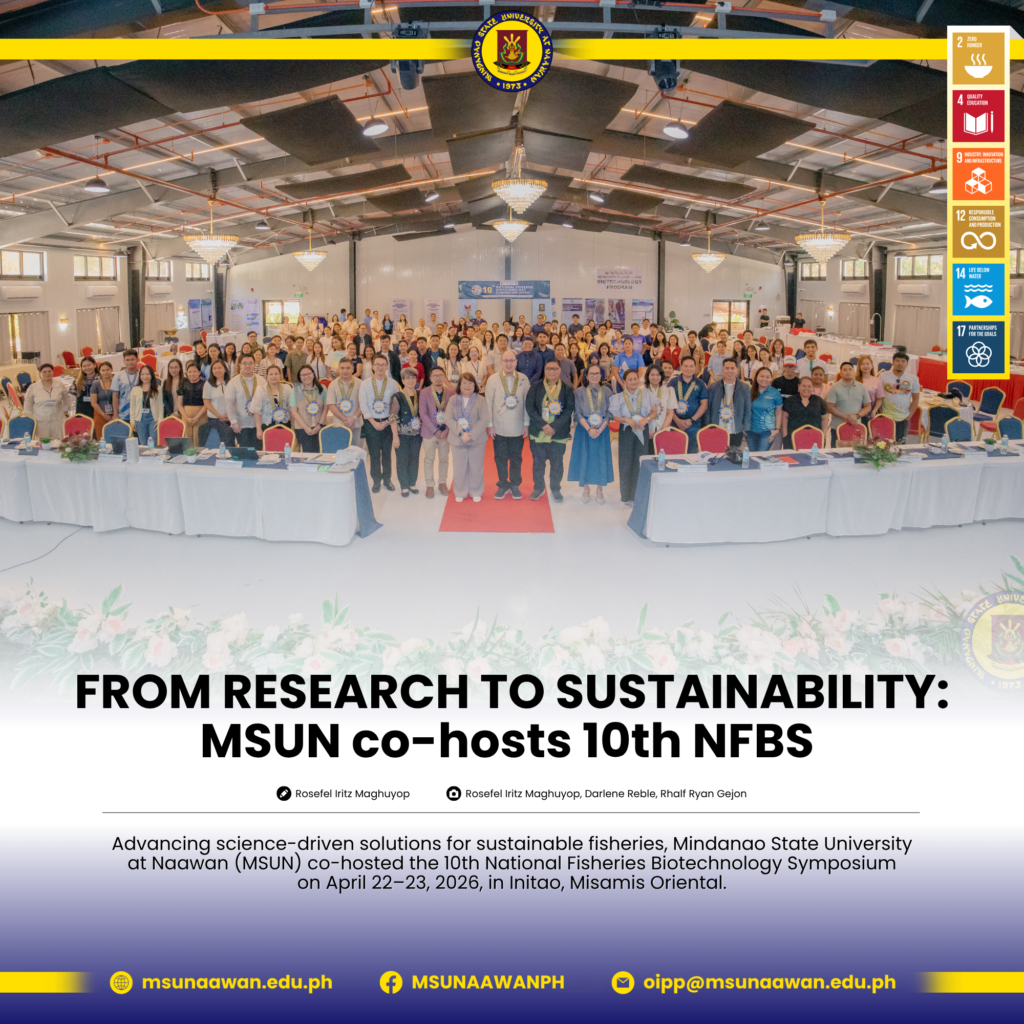
FROM RESEARCH TO SUSTAINABILITY: MSUN co-hosts 10th NFBS
Advancing science-driven solutions for sustainable fisheries, Mindanao State University at Naawan (MSUN) co-hosted the 10th National Fisheries Biotechnology Symposium on April 22–23, 2026, in Initao, Misamis Oriental. Organized by the Fisheries Biotechnology Center of the Department of Agriculture – National Fisheries Research and Development Institute (DA-NFRDI), in collaboration with MSUN, the symposium gathered experts, researchers, and stakeholders from across the country to exchange knowledge and foster collaborations aimed at strengthening the fisheries sector. Carrying the theme, “From Research to Sustainability: Biotechnology Advancing Resilient and Food-Secure Fisheries,” the event emphasized the critical role of innovation and research in ensuring long-term sustainability and resilience in the fisheries industry. In her welcome remarks, Dr. Elnor C. Roa, Chancellor of MSUN, emphasized the importance of collective action in advancing fisheries biotechnology. “Welcome to the 10th National Fisheries Biotechnology Symposium… Let this symposium be a space where partnerships are formed, knowledge is shared generously, and common purpose is strengthened,” she said. Furthermore, the opening message of Maria Theresa M. Mutia, Executive Director of DA-NFRDI, delivered by Casiano H. Choresca Jr., highlighted the role of the symposium in bridging research and real-world application. “This symposium serves as a platform not only for academic discourse, but also for forging meaningful collaborations that translate research into real-world impact,” the message read. Messages of support were also delivered by Edward B. Yasay, Regional Director of the Bureau of Fisheries and Aquatic Resources Region X; Abdulcader M. Ayo, MSU System Executive Vice President; and Mercy Grace J. Acain, Municipal Mayor of Initao. Serving as keynote speaker, Ma. Jodecel C. Daunting, Center Chief of the DA-BFAR National Freshwater Technology Center, underscored the significance of the milestone event. “Today we celebrate not only science but also a decade of home, innovation, and our shared responsibility for the future,” she stated. The symposium formally opened with a ribbon-cutting ceremony and exhibit showcasing innovations and research outputs in fisheries biotechnology. Moreover, a series of plenary sessions featured distinguished experts, including Dr. Wilfred John E. Santiañez on harnessing the biotechnological potential of Philippine seaweeds; Dr. Peter A. Palma on sustainable fish breeding innovations; Dr. Joseph Leopoldo Laranja on feed conversion ratios and environmental balance; Dr. Mary Jane Amar on feed biotechnology; Dr. Christopher Caipang on molecular surveillance for mangrove crab aquaculture; and Dr. Maria Rowena Romana-Eguia on the use of AquaGRIS for sustainable management of aquatic genetic resources. Highlighting academic excellence and engagement, the event also hosted the National Fisheries Biotechnology Quiz Bee, moderated by Fernand Fagutao, where University of the Philippines Visayas emerged as champion. The two-day symposium reinforced the vital role of research, innovation, and collaboration in ensuring a resilient, sustainable, and food-secure fisheries sector – demonstrating how science can drive meaningful impact from communities to national development.
FROM RESEARCH TO SUSTAINABILITY: MSUN co-hosts 10th NFBS Read More »